Here you will get to learn Digital Marketing concepts from basic to a higher level. This blog provides you online Digital Marketing Course.

Latest

Showing posts with label DigitalMarketing. Show all posts

Monday, 11 May 2020

05:37

What is Domain, URL Structure, Title Tag?

A URL consists of a protocol, domain name, and path (which includes the specific subfolder structure where a page is located) and has the subsequent basic format: protocol://domain-name.top-level-domain/path. The protocol shows how a browser should retrieve information about a resource.

A title tag is an HTML element that defines the title of a web page. Title tags are presented on search engine results pages (SERPs) as the clickable headline for a given result and are important for usability, SEO, and social sharing.

Many of your visitors will come to your website by clicking on a link, so you may wonder if it really matters what’s in the actual URL of a specific page.

It may surprise you to know that when it comes to on-site SEO, what your URLs look like is actually really important.

What is URL Structure?

Your website URL runs as your address on the web. It’s the most direct way for someone to visit a page on your website. If you’re not familiar with the term, the URL is the thing that starts with either www or HTTP.

In the early stages of starting a website, you want to sit down and figure out a standard structure for your website URLs. (If your website is already established and growing, it’s not too late to do this now, it just might require more work.)

Your URLs always start with the root domain for your website (e.g. www.yourwebsitename.com), so what you want to set is what follows for individual pages.

Your URL structure will immediately relate to your larger site architecture. You want your URLs to both reference what’s on the specific page, as well as help, situate the website visitor to where this page belongs on the larger website. For example, the URL for a post on your blog should look something like this: www.yourwebsitename.com/blog/nameofyourblogpost

At a glance at the URL, any visitor who reached the post through an outside link would quickly be able to see that they’re on a blog, as well as some basic information about the specific blog post on the page.


Why Does URL Structure Matter?

Your URL structure matters for a few key purposes.

First, for Google to consistently deliver appropriate results to searchers, it has to know what each page in its index is about. The URL is one of the most critical parts of the page Google looks at to decide what a page is about.

Next, an automatic URL structure makes your site easier to operate for users. If someone browsing a retail website for clothes finds themselves on the page www.clothesretailer.com/womens/dresses/nameofspecificdress, they know the page belongs in the two sections that precede the final part of the HTML: women’s clothes and dresses. Savvy web users also know they can delete the last few parts of the URL (dresses/nameofspecificdress) to get back to the larger selection of women’s clothes.

And lastly, the same thing that makes a good URL structure automatic for users is good for search engines too. The search engine crawler can more easily make the appropriate links between different pages on your website  – it can see that a particular item belongs in the same category as other dresses (even if “dress” isn’t in the product name), which belong in the larger category of women’s clothes on the site – information that helps the crawler better understand what different sections of the website are about and how they relate to each other.

As an attached benefit, having those extra categories lead the specific keyword or product name in your URL adds in some extra relevant keywords without creating a URL that’s spammy.  That gives Google just a little bit more information to make sure it understands what’s on the page and knows what keywords the page should show up in the search for.s

7 Tips for Creating a Good URL Structure

The URL is a pretty basic part of on-site optimization, but one that it’s important to get right.  Here are a few good ways to make sure you use your URLs wisely.

1. Always edit a page’s URL to be relevant.

2. Follow a standard URL structure.

3. Keep it short and simple.

4. Use your primary keyword.

5. Use hyphens to separate words.

6. Remove stop words.

7. Use canonical tags where needed.


Saturday, 21 March 2020

00:00

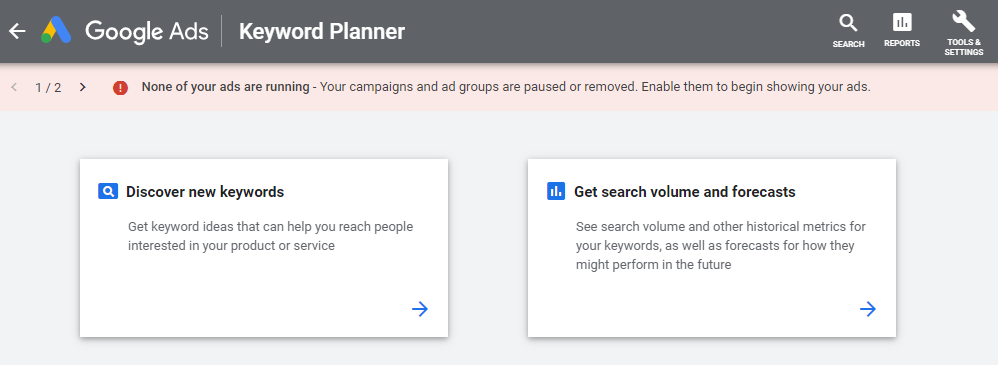
What is Google Keyword Planner?

Keyword Research With Google Keyword Planner::-

Fortunately, Google has a  free keyword research tool that permits you to do only that: Google Keyword Planner (previously the Google Keyword Tool). 


Google Keyword Planner gets unfavorable criticism, particularly since Google expelled the capacity to see precise month to month search volumes. Presently they simply show a dubious range.

You can recover these, however, you need to run an AdWords campaign. These costs money. 

Yet, don't let this put you off. Google Keyword Planner is an INSANELY useful asset and has some reasonable advantages. Not least, the way that it recommends suggests keyword ideas that you can't discover anyplace else.


keyword planner


Monday, 9 March 2020

23:18

What is site analysis?

What is site analysis?
A site analysis is primarily a set of tests and checkpoints to see if you’re website is doing it’s best. The website analysis is important for fast performance, conversion, lead generation and driving traffic to your website. For example, the HTML code has to have no errors, keywords need to be used properly, the layout has to structured, the site is easy to navigate, pictures have to be optimized, alt tags and meta tags have descriptions, there’s no broken links and the speed and performance needs to be fast.


Tool for site analysis:-
neilpatel:-


Saturday, 7 March 2020

06:40

THE FULL LEAD TO ON-PAGE AND OFF-PAGE SEO

THE FULL LEAD TO ON-PAGE AND OFF-PAGE SEO

Search Engine Optimization (SEO) has been around for nearly as long as the internet has been public, and since the early days, businesses have been using it to reach new audiences, bring traffic to their websites, spread knowledge, and make growth.

But SEO has become a great deal since it was first used to stuff as many keywords as possible into content and fill pages with backlinks. Besides time, SEO has grown a modern and technical practice that’s deeply informed by popular web user behavior, and today’s substance uses both on-page and off-page techniques to guarantee high-quality websites make it to the top of search engine result pages.

But what specifically are on- and off-page SEO, and how can digital marketers use them to serve clients?


On-Page SEO

  • Headings
  • URL structure
  • Alt text for images
  • Site speed
  • Internal links
  • Meta descriptions
  • Responsiveness     

On-Page SEO Technical  Practices

Title tags are HTML elements you can use to designate the name of a webpage, and that gets displayed on SERPs as the clickable result title. Every title tag should be unique, descriptive about what the page is about, optimized with a keyword and under 60 characters in length.

Headings are the titles you give your content, and these should be in the H1 form for the best results. Headings should concentrate on important and descriptive words, and while you can optimize them with keywords, don’t stuff them full. In order to break up content, you can also use subheadings (H2 through H6) following the same best practices, but don’t repeat keywords or phrases during a post.

The URL structure is important when search engines decide how important a page is compared to a query, and it should be descriptive of the page’s subject. You can also optimize URLs with keywords, so long as they're related.

Alt text or alternative text gives search engines with more information about an image, though it’s typically used to explain images to web visitors who can't see them. As such, the alt text should be precise and indicative of the image content, 125 characters or less, and optimized with a keyword or phrase only if relevant.

Page load speed is important as slow-loading pages have high bounce rates. As such, search engines penalize slow-loading pages with a lower ranking, so it’s essential to guarantee fast page load speed.

Meta descriptions are short but clear descriptions that grow on title tags, compile a page’s content and tell web users why they should read your content instead of somebody else’s. The meta description appears below the title and the URL, and it should be maintained below 160 characters.

Responsiveness is a design element that ensures your page will display properly on any device, including mobile devices and desktop ones. This will continue to be an important factor as more and more people around the world use mobile devices for an online search.

Off-Page SEO

Off-page optimization is described as the technique which helps the website to grow its ranking on the search engine results page. These factors function outside the boundaries of the web pages. These ranking factors are not immediately controlled by the publisher. Off-page optimization primarily deals in link building for SEO.
Off-page SEO is a long duration and time-consuming process. It includes getting backlinks to your webpage from the authority sites, Social media and Social bookmarking. Off-page factors work in the background to enhance the search rankings.

significance:
Search engines have been working on two wheels, On-page, and Off-page factors. if one disbalances, it will begin to fail in proper SEO.
Talking about Off-page optimization, there are people who neglect off-page optimization, but still expect immediate results. To make sure that your website ranks, there should be visibility of the website and so the scale needs to be maintained.
Off-page SEO plays an essential role in the backend. Without using off-page factors, surely your website can not rank. This is due to important factors such as link building, social media, videos, blogging, etc. If any website needs references from a website, it(website) should be socially active and should surely be shared amongst the communities of their corner.

Therefore, off-page factors are essential for any website to rank.

Off-page optimization methods for more solid rankings!
By using off-page Seo tactics, you can increase the ranking of your web page, be outstanding and get hit traffic on your webpage. Let’s go into various ways to optimize your web page.

  • Link building -  It is one of the most popular ways of doing off-page optimization. Link building is described as building external links with your website. The main purpose is to get as many links or votes as you can to rank more powerful than your competitors. The webmasters are looking out for cheat codes that how can they create links to their websites. The more the backlinks, the greater is the authority. Some of the steps which help in building link building are:
  1. Blog Directories - These are directories like yellow pages that link the entry back to a website.
  2. Forum signatures - By commenting on forums, people were making a link back to their website as they used to leave links in their signatures.
  3. Comment link - Just as in forum signatures, where you leave a link in your signature when you comment on any other’s blog to get a link back, here, rather than writing your name you write keywords in the comment. 
  4. Article directories - If you publish your article in the article directories, you will get a backlink to your website. Essentially directories allow only original content, but there can be some directories which accept article which is reworded or spun.
  5. Shared content directories - In shared content directories, websites like Hubpages or infobarrel allow you to publish your content and in return, you can add links favoring your website.
  6. Link exchange schemes -  This is an exciting way to build links. The scheme tells about getting in touch with the webmasters of different websites and exchange links.
  • Social Media - Different way of building links is by engaging your website on social media platforms. It is an excellent way to bring traffic. The links which you see on social media are usually no-follow links, but this does not mean that those links do not have any value. Introducing your brand on social media platforms will make a hell lot of traffic. Go straight with your plan and website, you will surely start ranking.
  • Social Bookmarking -  This is another excellent way of advertising and attracting large traffic to your website. This can be done by promoting your blogs on popular websites such as Reddit, ScoopIt, Digg, StumbleUpon, etc. The content is very often updated on such sites, which is appreciated by Search engines.  
  • Guest Blogging - We know the reality that by curating new, unique, compelling content, building up new links will direct traffic to your website. Blogging is a means to attract traffic with a simple cost. By posting comments on other websites will allow you to add links in the comments section. The links will be crawled by the search engines leading to driving traffic to your website.
 

Friday, 6 March 2020

20:38

Understanding traffic, keywords.

Understanding traffic, keywords.

Traffic:
Traffic is visitants to your website. They are arranged into different sections, depending on how they found you. Get your head around the sorts of traffic that you’ll usually see used in online analytics:

Direct traffic URL type-ins, bookmarks, or media links that are not traced

Campaign traffic display ads, email campaigns, social media campaigns (you can create a campaign tag to link to a landing page to track this)

Search traffic from search engines, including both organic (defined below) and paid search

Referral traffic from other sites that have immediate links to your site

Organic traffic all traffic that comes to your site as a consequence of unpaid search results.

Keyword:

The meaning of a keyword is a meaningful word, or a word used to find information when examining. When you are looking for essay examples and you type "essay examples" into Google, the words "essay examples" are an example of keywords.

In this screenshot, you will get to know traffic on a particular keyword. Neil Patel is one of the best site to search for the keywords and traffic on it.


Tuesday, 3 March 2020

23:00

What are search engines and their functions?

What are search engines and their functions?

A web search engine or Internet search engine is a software system that is intended to complete web search (Internet search), which intends to look through the World Wide Web in a deliberate manner for specific data indicated in a literary web search question. The list items are for the most part introduced in a line of results, frequently alluded to as web crawler results pages (SERPs). The data might be a blend of connections to site pages, pictures, recordings, infographics, articles, examine papers, and different kinds of documents. Some web indexes additionally mine information accessible in databases or open registries. Not at all like web indexes, which are kept up just by human editors, web indexes additionally keep up ongoing data by running a calculation on a web crawler. Web content that isn't fit for being looked at by a web index is commonly depicted as the deep web.


Since the origin of the Internet, individuals have been putting away and posting a lot of effectively available information on the web. The Internet currently has a vast measure of significant data. Web crawlers are essential for finding, arranging, putting away and positioning the estimation of that data on the web. Famous web search tools like Google, Yahoo and Bing find applicable data and present it to clients. So as to effectively locate a particular piece of information, it's significant for you to know the four principal elements of the web crawlers.

Functions:

Crawling
The crawler, or web bug, is an essential programming segment of the web crawler. It basically figures out the Internet to discover site addresses and the substance of a site for capacity in the web crawler database. Creeping can examine fresh out of the plastic new data on the Internet or it can find more seasoned information. Crawlers can look through a wide scope of sites simultaneously and gather a lot of data all the while. This permits the web search tool to discover momentum content on an hourly premise. The web bug creeps until it can't locate any more data inside a website, for example, further hyperlinks to inner or outer pages.

Indexing
When the web index has slithered the substance of the Internet, it files that substance-dependent on the event of catchphrase states in every individual site. This permits a specific inquiry question and subjects to be found no problem at all. Catchphrase phrases are the specific gathering of words utilized by a person to look through a specific theme.
The ordering capacity of a web index initially avoids any superfluous and normal articles, for example, "the," "an" and "an." After dispensing with regular content, it stores the substance in a sorted out manner for speedy and simple access. Web index architects create calculations for looking through the web as indicated by explicit catchphrases and watchword phrases. Those calculations coordinate client created watchwords and catchphrase expressions to content found inside a specific site, utilizing the record.

Storage
Putting away web content inside the database of the web search tool is basic for quick and simple looking. The measure of substance accessible to the client is reliant on the measure of extra room accessible. Bigger web search tools like Google and Yahoo can store measures of information extending in the terabytes, offering a bigger wellspring of data accessible for the client.

Results 
Results are the hyperlinks to sites that appear in the web index page when a specific watchword or expression is questioned. At the point when you type in a pursuit term, the crawler goes through the list and matches what you composed with different watchwords. Calculations made by the web search tool planners are utilized to give the most applicable information first. Each web index has its own arrangement of calculations and accordingly returns various outcomes.


Monday, 2 March 2020

07:18

What is SEO?

What is SEO?

SEO stands for Search Engine Optimization, which is the method of enhancing the quantity and quality of traffic to your website through organic search engine outcomes.

To comprehend the genuine importance of SEO, we should separate that definition and take a gander at the parts:

Quality of traffic. You can pull in all the guests on the planet, yet on the off chance that they're going to your site since Google reveals to them you're an asset for Apple PCs when truly you're a rancher selling apples, that isn't quality traffic. Rather you need to draw in guests who are truly intrigued by items that you offer.

Amount of traffic. When you have the opportune individuals navigating from those web index results pages (SERPs), more traffic is better.

Organic results. Advertisements make up a noteworthy segment of numerous SERPs. Natural traffic is any traffic that you don't need to pay for


How SEO works?


You may think about an internet searcher as a site you visit to type (or talk) an inquiry into a container and Google, Yahoo!, Bing, or whatever web index you're utilizing mystically answers with a considerable rundown of connections to site pages that might respond to your inquiry.

That is valid. Be that as it may, have you at any point halted to think about what's behind those mystical arrangements of connections?

Here's the manner by which it works: Google (or any web index you're utilizing) has a crawler that goes out and assembles data pretty much all the substance they can discover on the Internet. The crawlers take each one of those 1s and 0s back to the internet searcher to construct a record. That list is then taken care of through a calculation that attempts to coordinate such information with your inquiry.
05:46

What is Digital Marketing and What We Are Going to Study ?

What is Digital Marketing and What We Are Going to Study in DigiShaala?

Simply put, digital marketing is the advertising of products or brands using electronic devices or the internet. It also combines text messaging, instant messaging, video, apps, podcasts, electronic billboards, digital television and radio channels, etc. Digital marketing uses various channels and technologies that empower an institution to review campaigns, content, and approach to understand what’s working and what isn’t – typically in real-time.

Topics that we are going to cover are stated below:-

  • What is SEO?
  • What are search engines and their functions?
  • Understanding traffic, keywords, etc .
  • On-page optimization
  • Site Analysis
  • Keyword Research With Google Keyword Planner
  • Domain, URL Structure, Title Tag
  • Meta Tag, Anchor Tag, H1 Tag
  • Google Analytics (Code Generation)
  • Image Optimization (Alt Tag),
  • Sitemap Creation & Submission (html and xml)
  • Robots.txt, Custom 404,
  • 301 Redirect, .htaccess
  • Content Optimization